Hutras contacted Christoforidis about "his Cleisthenes Project". But, upon telephoning Athens, Christoforidis learned that there were no portraits or busts of Cleisthenes on record in the ancient collections. She called art historians she knew around the world. No images to be found.
Jim McGlew, a professor of classical studies at Iowa State University and a specialist in ancient Greek democracy, was not surprised to hear Cleisthenes had never been memorialized in art.
"Cleisthenes' fundamental aim was to deny his personal existence. He taught people that through their interconnections and their daily lives, and who they were, that they really were the demos, which is where the word democracy comes from," said McGlew, author of "Tyranny and Political Culture in Ancient Greece."
So, Christoforidis envisioned an Everyman, placed in the dress and artistic style of his period, the late 6th century B.C. - and looking distinctly Greek. She began to sculpt democracy personified, she said, an image of stability and permanence with touches of personality lent by her four sons - one each modeling the eyes, ears, nose and lips.


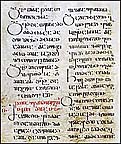 "Working in an eight-by-eight-foot plastic tent, Rev. Justin Sinaites, using a special 75 megapixel digital camera, shoots images that practically replicate the original manuscripts from the 3,300 work collection of St. Catherine's monastery. St. Catherine's is the world's oldest continuously inhabited Christian monastic community. The collection includes some of the world's oldest Bibles, dating from the fifth century, and books in 11 languages, including Greek, Latin, Arabic, Persian and Slavonic.
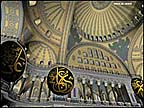 "A team at the University of Geneva have developed virtual reality models of two Turkish mosques dating from the Ottoman era of the 16th century which let you move around and explore the buildings in real-time. For the project, the Miralab team focused on the mosques of Aya Sofya and Hagia Sophia. As well as the buildings, they also created virtual humans, including an imam, to simulate what Friday prayers would have been like in the Ottoman era.