Showing posts with label skeleton. Show all posts

Saturday, January 03, 2009

Study shows Nasca trophy heads home grown


Just like the Carthaginians, who in time of crisis sacrificed their own children, the Nasca turned to their own people for ritual sacrifice to ensure a plentiful harvest. I wonder why, though, the Nasca followed this practice instead of sacrificing war prisoners like the surrounding Incas? Perhaps, also like the Carthaginians, they preferred commerce and trade to conquest of their neighbors - or simply chose to focus their efforts on other aspects of social development rather than the maintenance of warriors that could triumph over their more warlike neighbors.

[Image - Nasca double-spouted jar depicting bird with trophy head, courtesy of the British Museum]

"In South America’s ancient Nasca culture, some local folk literally lost their heads so that everyone else might fill their bellies. The Nasca obtained trophy heads, human skulls modified in various ways and intended to spur successful farming, from their own people, not from foreigners slain in battles and raids as was practiced by the Inca and other prehistoric societies of that region, a new study finds.

Earlier analyses of paintings on Nasca pottery had suggested that members of this culture believed that the taking of trophy heads provided supernatural power needed for crop growth. Since the first Nasca trophy heads were discovered nearly 100 years ago, scientists have debated whether these items came from vanquished enemies or from local individuals thought to represent venerated Nasca ancestors...

...The finding comes from an analysis of the diet-related substances that had collected and remain in the teeth of unearthed Nasca trophy heads. Comparing these substances with those in the teeth of skeletons known to be from Nasca individuals shows that one set of trophy heads came from the Nasca themselves rather than from outsiders, Knudson’s team reports in a paper published online December 11 in the Journal of Anthropological Archaeology.

Such data can’t yet pinpoint the geographic origins of the people whose heads became Nasca trophy heads, nor can the data rule out the possibility that the trophy heads were acquired in fights between local Nasca groups, remarks anthropologist William Isbell of Binghamton University in New York. “We can’t draw any final conclusions from this new study, but the results make it more likely that these severed heads were ancestors and not enemies,” Isbell says...

...Nasca sites of various ages have yielded more than 150 trophy heads, often found in caches of as many as 48 skulls, in graves as offerings to the dead and in public buildings. Most trophy skulls come from men, but some are from women and teenagers.

Knudson and her colleagues studied 16 trophy heads found at six Nasca sites by the late anthropologist Alfred Kroeber in 1925 and 1926. All the heads had been modified in the same way, with a hole drilled in the forehead for a carrying cord. Many Nasca trophy heads contain comparable forehead holes. Kroeber’s finds are kept at The Field Museum in Chicago.

Biochemical profiles of tiny amounts of tooth enamel taken from these trophy heads were compared to corresponding data for 13 intact Nasca skeletons that had already been excavated from either of three Nasca cemeteries. The scientists measured levels of key forms of strontium, oxygen and carbon in the ancient teeth, which were compared to baseline levels of these substances in rock formations, water, plants and small animals throughout the Nasca region.

Signature ratios of different forms of strontium, oxygen and carbon reflect where a person lived and what types of foods he or she consumed.

Overall, teeth from the trophy heads and from the comparison group displayed no substantial differences in the ratios of these substances. " - Science News
Apparently, an as yet unpublished mitochondrial DNA study by Kathleen Forgey of Indiana University Northwest in Gary points to a similar conclusion.
If you enjoyed this post, never miss out on future posts by following me by email!

Thursday, August 14, 2008

Stone Age Cemetery in Sahara Yields Evidence of Early Hunters

When Paul C. Sereno went hunting dinosaur bones in the Sahara, his
career took a sharp turn from paleontology to archaeology. The
expedition found what has proved to be the largest known graveyard of
Stone Age people who lived there when the desert was green.

In its first comprehensive report, published Thursday, the team, sponsored by the National Geographic Society,
described finding some 200 graves belonging to two successive
populations. Some burials were accompanied by pottery and ivory
ornaments. A girl was buried wearing a bracelet carved from a hippo
tusk. A man was interred seated on the carapace of a turtle.

The
most poignant scene was the triple burial of a petite woman lying on
her side, facing two young children. The slender arms of the children
reached out to the woman in an everlasting embrace. Pollen indicated
that flowers had decorated the grave. [Image by Mike Hettwer/National Geographic]

The sun-baked dunes at the
site known as Gobero preserve the earliest and largest Stone Age
cemetery in the Sahara, Dr. Sereno’s group reported in the
current issue of the online journal PLoS One. The findings, the
researchers wrote, open “a new window on the funerary practices,
distinctive skeletal anatomy, health and diet of early hunter-fisher-gatherers, who expanded into the Sahara when climatic conditions were favorable.”

The initial inhabitants at Gobero, the Kiffian culture, were tall
hunters of wild game who also fished with harpoons carved from animal
bone. Later, a more lightly built people, the Tenerians, lived there,
hunting, fishing and herding cattle. An examination of their fossilized
skeletons indicated that both cultures lived and ate relatively well.

From an analysis of the skeletons and pottery in those two seasons,
scientists identified the two successive cultures that occupied the
settlement. The Kiffians, some of whom stood up to six feet tall, both
men and women, lived there during the Sahara’s wettest period,
between 10,000 and 8,000 years ago. They were primarily
hunter-gatherers who speared huge lake perch with harpoons.

Elena
A. A. Garcea, an archaeologist at the University of Cassino in Italy,
identified ceramics with wavy lines and zigzag patterns as Kiffian, a
culture associated with northern Africa. Pots bearing a pointillistic
pattern were linked to the Tenerians, a people named for the
Ténéré Desert, a stretch of the Sahara known to
Tuareg nomads as a “desert within a desert.”

Christopher M. Stojanowski, an archaeologist at Arizona State University,
said the two cultures were “biologically distinct groups.”
The bones and teeth showed that in contrast to the robust Kiffians, the
Tenerians were typically short and lean and apparently led less
rigorous lives. Perhaps, Dr. Stojanowski said, they had developed more
advanced hunting technologies for taking smaller fish and game.

The
shapes of the Tenerian skulls are puzzling, researchers said, because
they resemble those of Mediterranean people, not other groups from the
southern Sahara.

Dr. Sereno said in an interview that both
cultures, the Tenerians in particular, appeared to have settled into
semi-sedentary lives in a more or less year-round community. Families,
he said, are not usually part of mobile hunting parties, and yet many
of the burials at the site are of juveniles. The abundant refuse mounds
also attested to long-term occupation. - New York Times

If you enjoyed this post, never miss out on future posts by following me by email!

Friday, July 11, 2008

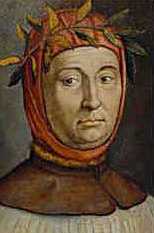
Petrarch's skull missing from tomb in Arquà Petrarca


"Of all the world's great writers, Petrarch is the best known for losing his head. On Good Friday in 1327, the then 23-year-old writer and scholar fell madly - and forlornly - in love with a woman he saw in a church congregation.

His bad luck, to become enamored of a woman who did not return his affections, was the rest of humanity's good fortune. For, in seeking to express his feelings for the woman he called Laura, Francesco Petrarch gave definitive form to the sonnet and established himself as the first modern, western poet.

Now, it seems, he has lost his head for a second time.

Scientists who have been examining what they thought were Petrarch's remains have discovered that the skull belongs to someone else. And they suspect it could be that of a woman.

Professor Vito Terribile Wiel Marin of Padua University, who is heading the investigation, told the Guardian yesterday: "This must have been robbery. It is not, frankly, a nice business."

The suspects in a literary whodunnit spanning almost 700 years include a bibulously larcenous 17th century friar and a supposedly clumsy 19th century anatomist. Death has put both beyond the reach of indictment, but if Petrarch's skull were to be traced as a result of the latest discovery it could lead to charges of receiving stolen goods, an offense for which, under Italian law, there is no statute of limitations.

The seeds of the mystery were sown last November when a crane lifted the lid from Petrarch's pink marble tomb at Arquà Petrarca, the town where he died in 1374. It was the latest in a series of exhumations in Italy of famous historical figures. Prof Terribile Wiel Marin helped to set the vogue when he examined the remains of St Anthony of Padua in 1981.

One of the main reasons for picking over Petrarch's remains was to reconstruct his face and create a definitive portrait in time for the 700th anniversary of the poet's birth on July 20.

"Since we now don't even have his skull, that is absolutely impossible," Prof Terribile Wiel Marin lamented.

The bones of what was thought to be Petrarch's venerable head were in fragments when they were removed from his tomb. In 1873, it had been opened by an investigator, Professor Giovanni Canestrini, also at Padua University.

"He claimed Petrarch's skull disintegrated on contact with the air," said Prof Terribile Wiel Marin. "Since none of us has ever come across an instance of this happening, we can only conclude he dropped it."

Or might he have made up the whole story, putting back a damaged substitute and keeping for himself the head of a man revered as one of the fathers of the Renaissance?

It was when the skull's fragments found in Petrarch's tomb were reassembled that doubts surfaced about their true nature. Prof Terribile Wiel Marin said one of his team, Dr Maria Antonia Capitanio, noted the contours in two areas - above the eyes and below the ears - were more typical of a woman. Samples from a tooth and a rib were sent for analysis by Dr David Caramelli, a molecular anthropologist at Florence University who compared fragments of their DNA.

Last Friday, he reported back his sensational findings. "I am sure that the two samples are from different people," Dr Caramelli said yesterday..."
If you enjoyed this post, never miss out on future posts by following me by email!

Thursday, June 19, 2008

Ancient Jewelry Unearthed in Temple of Sun near Bulgaria's Sliven

"The archaeologist team of Bulgaria's Georgi Kitov has unearthed precious jewels, dating back from second or third century in Drumeva Mound near the Town of Sliven, the manager of the expedition himself announced.

The scientists found golden earrings, silver bracelets and three bronze rings in a Roman brick tomb of woman, buried in the mound.

A mourning bronze coin was discovered in the mouth of the skeleton and there was clay beads round its neck, the deputy-head of the group, Nikolay sirakov, revealed.

Drumeva Mound was girded with a stone wall, which showed it probably was a temple of the sun, Doctor Kitov said few days ago in an interview for Darik Radio." - Novonite.com
If you enjoyed this post, never miss out on future posts by following me by email!

Friday, May 30, 2008

Authentic Viking DNA retrieved


"Although “Viking” literally means “pirate,” recent research has indicated that the Vikings were also traders to the fishmongers of Europe. Stereotypically, these Norsemen are usually pictured wearing a horned helmet but in a new study published in the journal PLoS ONE this week, Jørgen Dissing and colleagues from the University of Copenhagen, investigated what went under the helmet; the scientists were able to extract authentic DNA from ancient Viking skeletons, avoiding many of the problems of contamination faced by past researchers.

Using freshly sampled material from ten Viking skeletons from around AD 1,000, from a non-Christian burial site on the Danish island of Funen, Dissing and colleagues showed that it is indeed possible to retrieve authentic DNA from ancient humans.

Wearing protective suits, the researchers removed the teeth from the jaw at the moment the skeletons were unearthed when they had been untouched for 1,000 years. The subsequent laboratory procedures were also carefully controlled in order to avoid contamination.

Analysis of the Viking DNA showed no evidence of contamination with extraneous DNA, and typing of the endogenous DNA gave reproducible results and showed that these individuals were just as diverse as contemporary humans. A reliable retrieval of authentic DNA opens the way for a valuable use of prehistoric human remains to illuminate the genetic history of past and extant populations."

If you enjoyed this post, never miss out on future posts by following me by email!

Sunday, March 16, 2008

Bone wear indicates Egyptians domesticated donkeys in 3,000 BCE


It never ceases to amaze me how much scientists can determine from examining skeletal remains:

"Donkeys may first have been domesticated in ancient Egypt around 3,000BC, research suggests.

A study of 10 donkey skeletons found near a pharoah’s tomb has found that the animals were in the early phases of domestication.

Professor Fiona Marshall, of Washington University, St Louis, said: “Genetic research has suggested African origins for the donkey. But coming up with an exact time and location for domestication is difficult.” The donkey skeletons resemble those of wild animals but show patterns of joint wear which indicate they were used for transport."

If you enjoyed this post, never miss out on future posts by following me by email!

Monday, November 05, 2007

Oldest UK skeleton even older than previously thought


Scientists say more accurate tests date the earliest human burial found in the UK to just over 29,000 years ago.

The skeleton of the Red Lady - actually a young male - was discovered at Goat's Hole Cave at Paviland on Gower in 1823 by William Buckland, then a geology professor at Oxford University. It owes its name to the red ochre covering the bones. When discovered the bones were thought to be around 18,000 years old, but were later redated to between 25,000 and 26,000. The remains were found along with a number of artefacts including ivory wands, bracelets and periwinkle shells.

"The remains and artefacts were previously difficult to date accurately," said Dr Higham.

"Many of the bones were treated with preservations in the 19th Century and some of this contamination is often difficult to remove."

He said their analysis was the bones were "just over" 29,000 years old.

It would mean The Red Lady lived in an age when the climate was much warmer than it would have been 4,000 years later.

If you enjoyed this post, never miss out on future posts by following me by email!

Tuesday, August 07, 2007

Citizen of Ancient Apollonia discovered in Sozopol Bulgaria

Novonite.com: Archaeologists from the Bulgaria's National History Museum have unearthed a tomb of a citizen, who lived in the ancient city of Apollonia, which is today's Black Sea town of Sozopol.

The team of Krastina Panayotova is working on the Harmani beach of Sozopol, a site which archaeologist have been exploring for many years now. During regular excavations Panayotova's team stumbled upon the tomb.

When the scientist opened it they found many pottery, the skeleton of a man, who lived some 2,500 years ago and a huge ceramic bowl with an inscription in ancient Greek.

The bowl has been already taken for a thorough expertise and a team of linguists was called to decipher the inscription. When this is done, the Head of the Museum Bozhidar Dimitrov hopes the scientists will get a further understanding of Apollonia Pontica - the first democratic state in the lands of today's Bulgaria.

The interesting thing for this artefact is that it was unearthed in the family part of the necropolis, where Histiyani, the tyrant of Milet, was buried.
If you enjoyed this post, never miss out on future posts by following me by email!